

Collections
Collections let you organise pastes into named groups - like playlists or bookmarks for code. A collection can be public (shareable) or private (visible only to you).
Requires Collections to be enabled in Settings → General, and the snipshare/create-collection ability (contributor and above by default).
What Are Collections?
Section titled “What Are Collections?”A collection is a curated list of pastes with a name, optional description, and a unique URL. You might create a collection called “PHP Utilities” to group all your helper functions, or “Interview Prep” to collect useful algorithm examples.
Collections belong to individual users and are accessible at a predictable URL:
/pastes/collection/{username}/{slug}/For example: /pastes/collection/jane/php-utilities/
Each collection slug is scoped to its owner - two different users can each have a collection with the same slug without conflict.
Browsing a Collection
Section titled “Browsing a Collection”Public collections can be viewed by anyone with the link:
/pastes/collection/{username}/{slug}/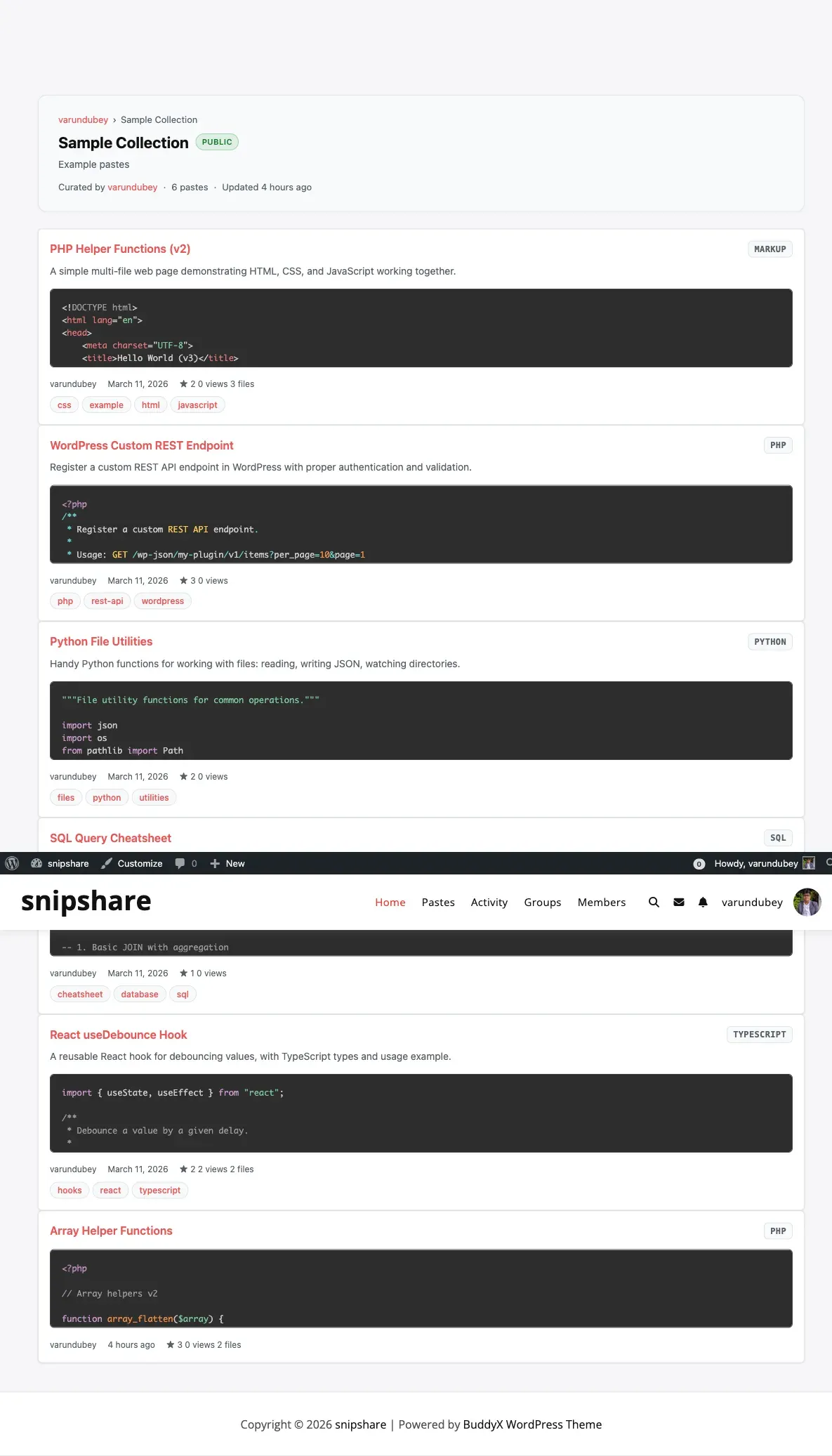
The collection page shows:
- Collection name and description
- Number of pastes in the collection
- List or grid of all pastes
- Pagination (uses the Pastes Per Page setting)
Private collections are only visible to the collection owner.
Creating and Managing Collections
Section titled “Creating and Managing Collections”Note: Creating, editing, and managing collections is currently done via the REST API. There is no built-in UI for these actions yet.
If you’d like your members to be able to create and manage collections through the browser, ask your site developer to build a UI using the SnipShare REST API. See the REST API documentation for details.
- Slugs are unique per user - you and another user can each have a collection with the same slug
- A user can have unlimited collections
- The paste count on each collection updates automatically when pastes are added or removed
- Deleting a collection does not delete the pastes it contains